
As demand for AI and cloud computing accelerates, data centers are becoming an increasingly essential part of the world’s digital infrastructure. That growth raises an important question: how can we build the infrastructure we need for tomorrow while responsibly managing its impact on communities and the environment today?
At Vantage, responsible development starts before construction. It means understanding the environmental and community implications of growth early, weighing them alongside reliability, affordability and customer needs, and making better decisions based on local conditions.
Building on our approach to responsible growth, our 2024-2025 Sustainability Report reflects how that approach is maturing, including new environmental goals, stronger measurement and a growing focus on integrating sustainability earlier into development decisions.
Building Sustainability into Every Development
Responsible data center development requires balancing performance, resource efficiency and community needs.
For every new development, we aim to achieve:
- Water-positive outcomes: Minimize water consumption and restore more water to local watersheds than our facilities consume.
- Biodiversity net gain: Enhance local ecosystems through habitat restoration, native landscaping and other site-specific improvements.
- Green building certification: Incorporate recognized sustainable design and construction standards into new facilities.
Alongside these development-level goals, we’ve established measurable targets across our global portfolio.
By 2030, we aim to:
- Reduce total value chain greenhouse gas (GHG) emissions intensity by 40% per megawatt-hour, against a 2025 baseline.
- Achieve 100% matched carbon-free electricity, with a focus on clean and committed capacity that is ready to be deployed and connected to the grid.
- Reach a portfolio-wide average annual operating Power Usage Effectiveness (PUE) of 1.25.
By 2050, we aim to:
- Achieve net-zero GHG emissions across our total value chain
We have updated our climate target framework as our emissions data, business growth projections and understanding of decarbonization opportunities have matured. Our new 2030 target expands our near-term focus to total value-chain emissions, including Scope 3. We also revised our net-zero target from 2040 to 2050 following a reassessment of our emissions baseline, projected growth and available decarbonization pathways. Together, these changes provide a more comprehensive framework for measuring and driving decarbonization as our business grows. We will continue to report absolute emissions alongside intensity performance, so our impact remains transparent as the business grows.
Responsible Design in Action
Our goals establish common expectations, but they do not prescribe identical solutions. Water availability, climate, grid conditions, ecosystems and community priorities differ significantly by market. Responsible development therefore requires translating those global expectations into decisions that make sense locally:
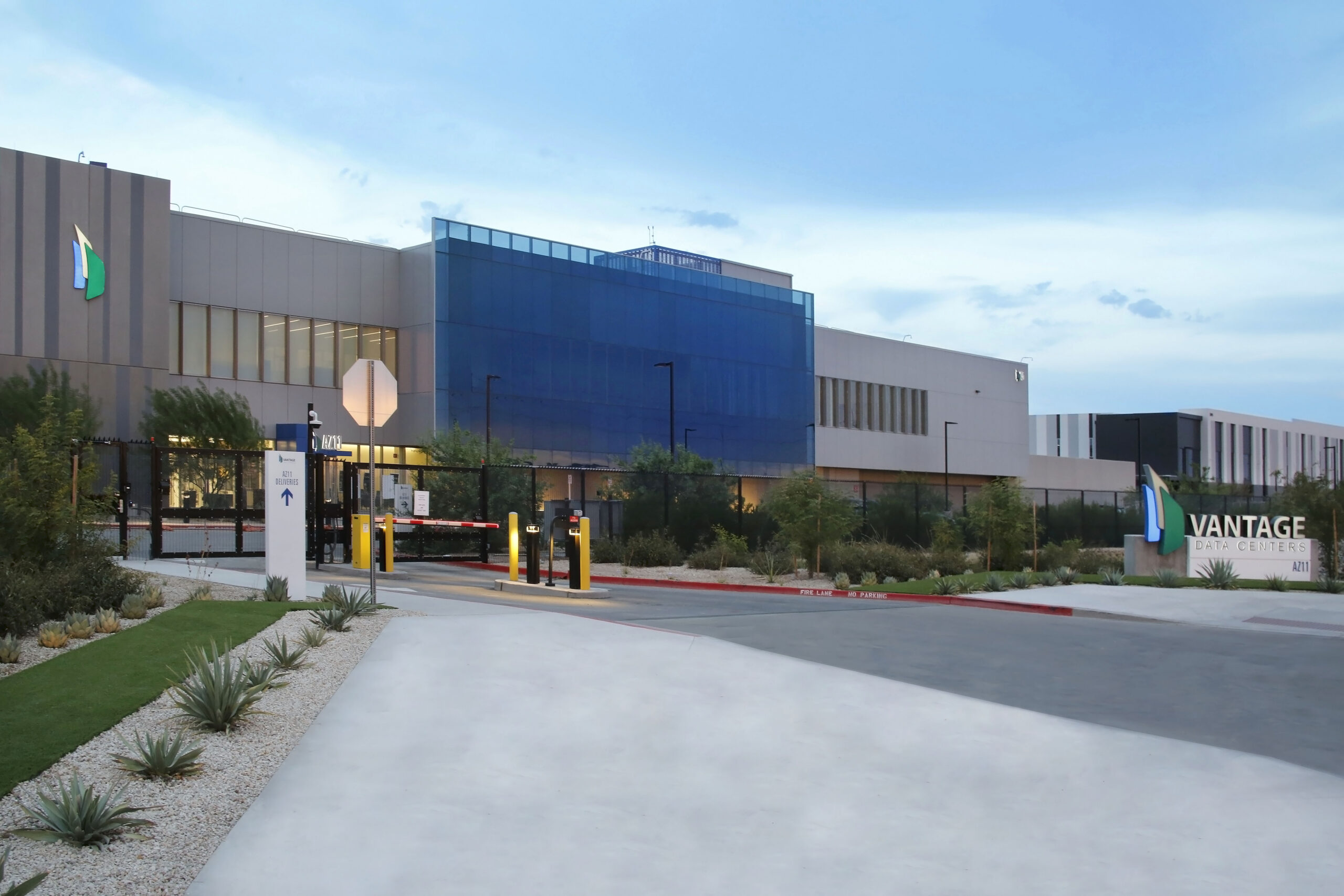
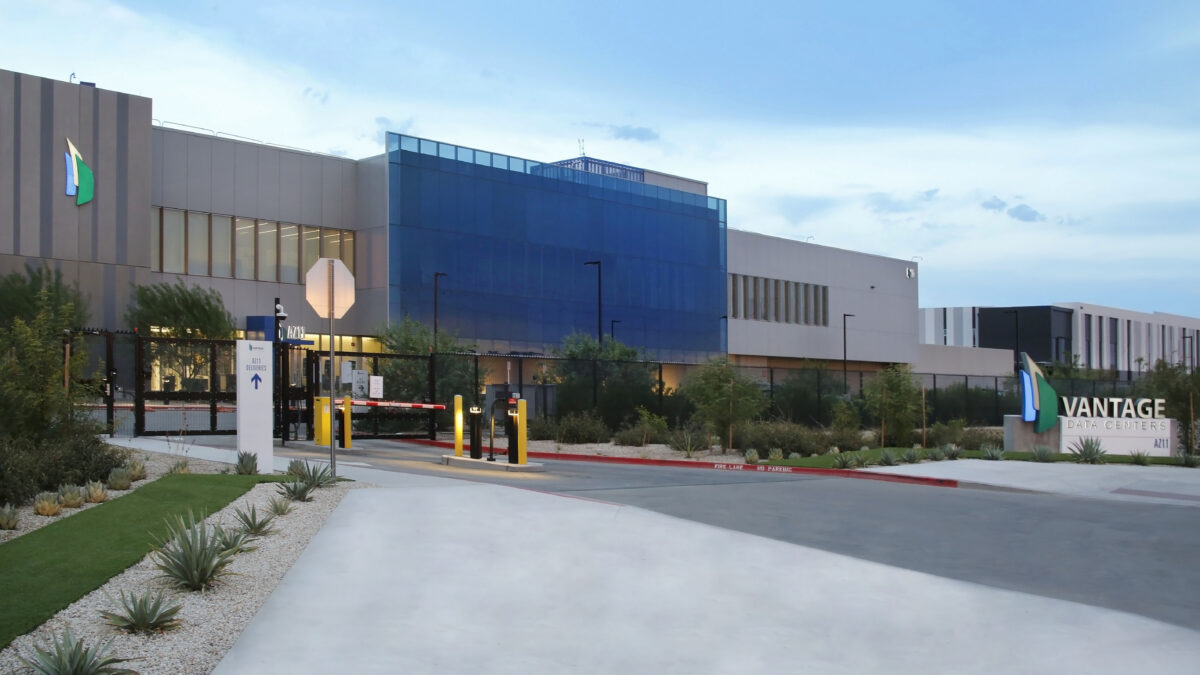
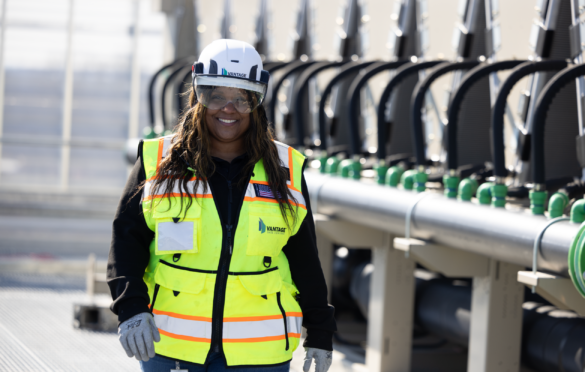
In Goodyear, Arizona, where extreme temperatures and water scarcity present significant challenges, our AZ1 campus (pictured above) uses closed-loop cooling and air-side economizers to reduce freshwater consumption while maintaining energy efficiency. The campus also achieved Green Globes certification.
In Switzerland, our Zurich II campus, designed to achieve a PUE of approximately 1.22, combines energy-efficient cooling with heat recovery, stormwater management and architectural design tailored to its surrounding neighborhood.
In Cyberjaya, Malaysia, where a tropical climate creates year-round cooling demands, our approach emphasizes energy-efficient systems and sustainable building design. Across APAC, we typically design facilities to LEED Gold standards, incorporating sustainability considerations while adapting to local climate conditions and operational requirements.
At our Lighthouse campus in Port Washington, Wisconsin, we are piloting approaches to water positivity and biodiversity net gain. This includes a $3 million commitment to restore approximately 1.8 miles of the Valley Creek Corridor, supporting improvements to water quality, habitat and community access.
These examples show how common sustainability expectations translate into specific decisions about building design, resource management and community integration in each market where we operate.
Perspective
Our approach is continuing to mature as we improve how we measure impacts, translate global expectations into project-level actions and respond to local needs. As Vantage grows, we are working to bring sustainability considerations earlier into development, strengthen how we measure performance and better understand what our projects mean for the communities and environments around them. The objective is not simply to meet a set of global goals. It is to make better development decisions, consistently and transparently, as the scale and complexity of our business grows.
Throughout this series, we will explore the questions communities are asking about water, energy, biodiversity and local impacts, along with the practical steps we are taking to address them.
How We Are Maturing Our Approach to Responsible Growth