Cooling Without the Drain: How Closed-Loop Systems Cut Day-to-Day Water Use
 Vantage Data Centers,
April 22, 2026
6 min read
Vantage Data Centers,
April 22, 2026
6 min read
Every search query, video stream, bank transaction and AI workload depends on compute running inside a data center, and that compute generates heat that must be removed, safely and continuously. Because of this, cooling is one of the most important design choices a data center operator makes. At Vantage Data Centers, closed-loop cooling is one of the innovations we’re deploying to drive high energy efficiency while significantly reducing ongoing water use.
What is closed-loop cooling?
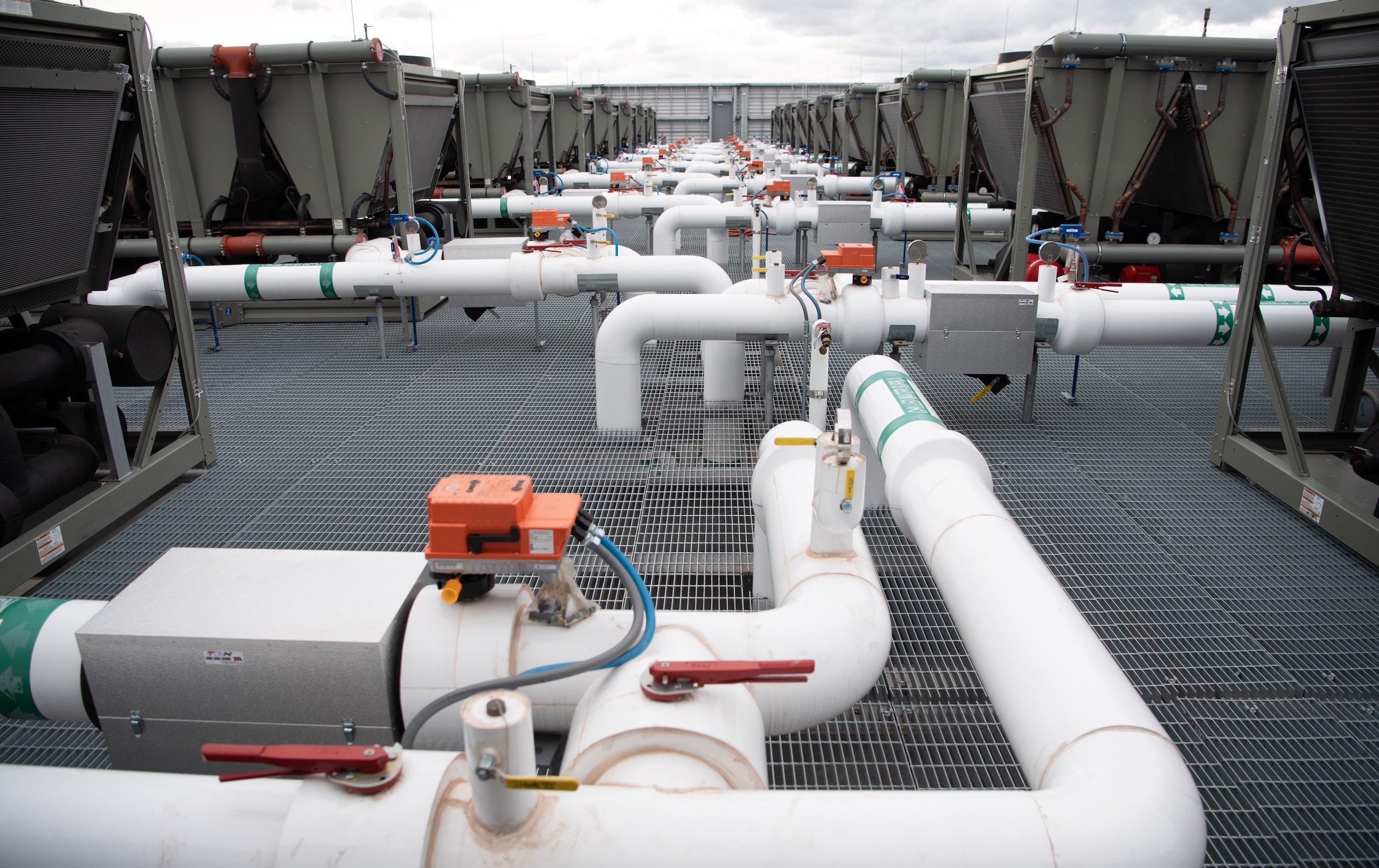
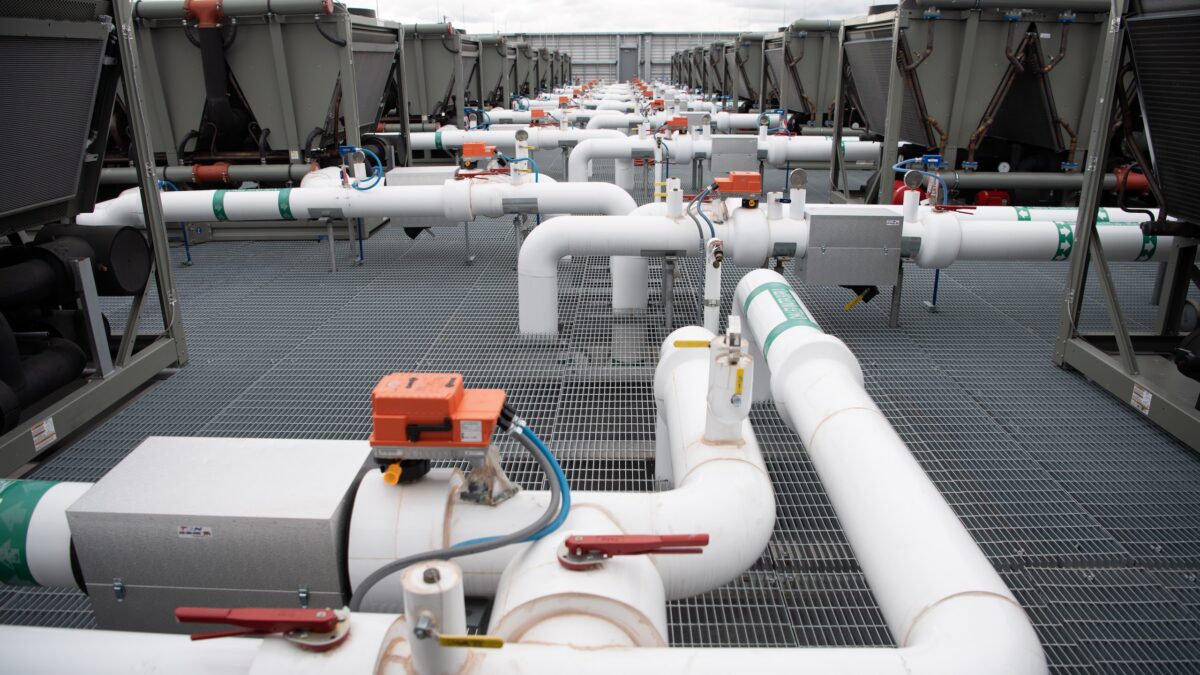
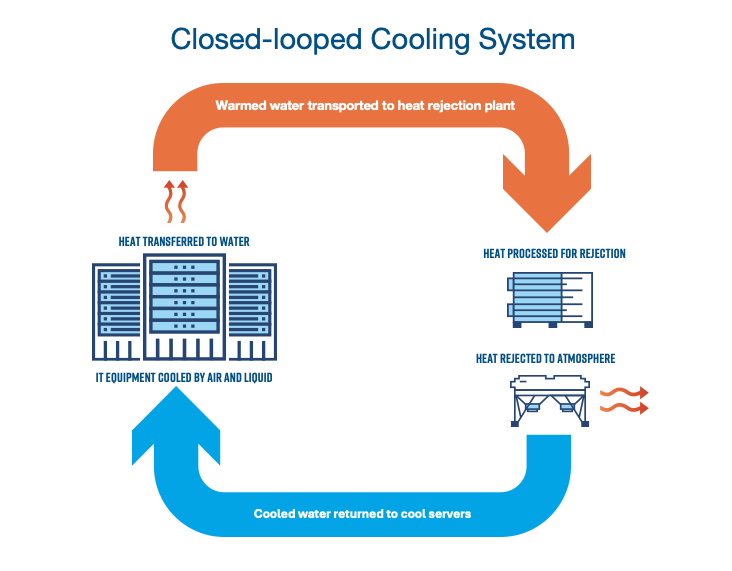
Closed-loop cooling is one way to cool the servers and networking equipment inside a data center. In simple terms, it circulates water through sealed piping to absorb heat from the data modules, then rejects that heat to outside air while keeping the cooling fluid contained so it can be reused again and again. Because the loop is closed and sealed, it avoids the daily water discharge associated with many evaporative cooling approaches.
How the system works (from commissioning to steady-state operation):
Like most large mechanical systems, closed-loop cooling is commissioned in phases as different parts of a building come online. During startup, the piping is initially flushed with water to clean and verify the system; that flush water is then disposed of as wastewater (similar to typical building wastewater). After flushing, the loop is filled and sealed for ongoing reuse.
To protect equipment over the long term, the closed-loop fluid includes common water-treatment additives such as anti-corrosive agents and pH adjusters. These are used to maintain optimal chemistry and help prevent rust and corrosion, increasing the useful life of the equipment, piping and fluid. In normal operation, the sealed nature of the system means routine “topping off” should not be necessary; additional make-up water is generally only needed in the event of a leak or maintenance event.
Why closed-loop cooling? The benefits and the trade-offs:
Closed-loop cooling is designed to balance two priorities that matter to customers and communities alike: energy efficiency and water stewardship.
- High energy efficiency: By efficiently moving heat through a circulating fluid and rejecting it to outside air, closed-loop systems can help reduce the energy required for cooling.
- High water efficiency: Because the system is sealed, the cooling water is preserved inside the piping and recycled continuously, supporting reduced day-to-day water consumption compared with evaporative approaches.
- Designed for dense compute: While the concept of using liquid to move heat is not new, applying it safely and effectively in dense, high-availability computing environments requires sophisticated mechanical design and controls.
As with any cooling strategy, there are trade-offs. Different approaches can optimize for different outcomes, such as the lowest possible Power Usage Effectiveness (PUE), the lowest possible Water Usage Effectiveness (PUE) or a specific set of operating conditions required by a customer’s IT equipment. The right answer depends on a variety of factors.
How closed-loop cooling compares to other approaches:
At a high level, data center cooling approaches often fall into three broad categories. Each has strengths and trade-offs, and the best fit depends on climate, operating conditions and customer requirements.
- Evaporative heat rejection: Similar to closed-loop cooling in topology but uses cooling towers to reject the heat to the atmosphere. The cooling towers use significant volumes of water on a 24x7x365 basis.
- Dry heat rejection: Our closed-loop cooling systems fall under this umbrella, water (if any) is recirculated. Heat is rejected to the atmosphere without any evaporation.
- Direct/indirect evaporative cooling: This method uses the evaporation of water to cool the air within a data center. It can deliver very low PUE, but it uses water on an ongoing, day-to-day basis.
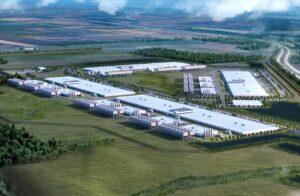
One of the primary reasons that Vantage favors dry cooling over evaporative cooling is that as a rule, evaporation has the biggest impact in hot dry climates – those where water is generally scarce and of poorer quality (for evaporative purposes). Because of this, we design our building systems to run without the use of evaporation. By coupling dry heat rejection with liquid cooled servers, we are able to strike a good balance of high energy efficiency and near-zero water usage.
Water sourcing and community impact:
Vantage works to source water responsibly, from local utilities, where possible. Depending on the region, that can include municipal water, and in some markets where it’s available, reclaimed (reused) water supplied by the local utility. For example, Vantage uses reclaimed water at certain data center campuses in Santa Clara, California.
Closed-loop cooling is one part of a broader approach to designing high-performance facilities. Vantage has committed to pursuing green building certification for new developments, which reinforces the need for energy- and water-efficient choices across the whole site, from cooling and lighting to plumbing fixtures and eliminating outdoor irrigation where feasible.
Looking beyond the data center building itself, Vantage is also committing to water positivity for new data centers, which is just one of several sustainability goals we have to ensure responsible growth around the world. We focus first on reducing water use through efficient cooling and operations, and when water is needed, supporting efforts that help replenish local watersheds. This work is guided by local conditions, including water availability, regional stress and community needs.

One example is the Valley Creek Corridor Restoration in Port Washington, Wisconsin, an initiative Vantage is supporting to improve stream flow, reduce flooding risk for neighbors and strengthen habitat for native aquatic and plant species.
As digital demand grows, especially with AI and other high-density workloads, cooling innovation becomes central to building the next generation of reliable, efficient data centers. Closed-loop cooling is one of the many ways Vantage is engineering for performance today while supporting responsible resource use in the places we operate.